A natural from a brand-new wet mill in southern Quiché
This month's Bean Juice Club coffee comes from Chuaquenun, a small community near the town of Joyabaj (pronounced "ho-yah-bach") in the Quiché department of Guatemala. Smallholder farmers grow it, and a wet mill that's only been around for a few harvests processes it.
In the cup, I'm getting plums, cherry pie, and red licorice, with a sweet chocolate finish.
Where it's from
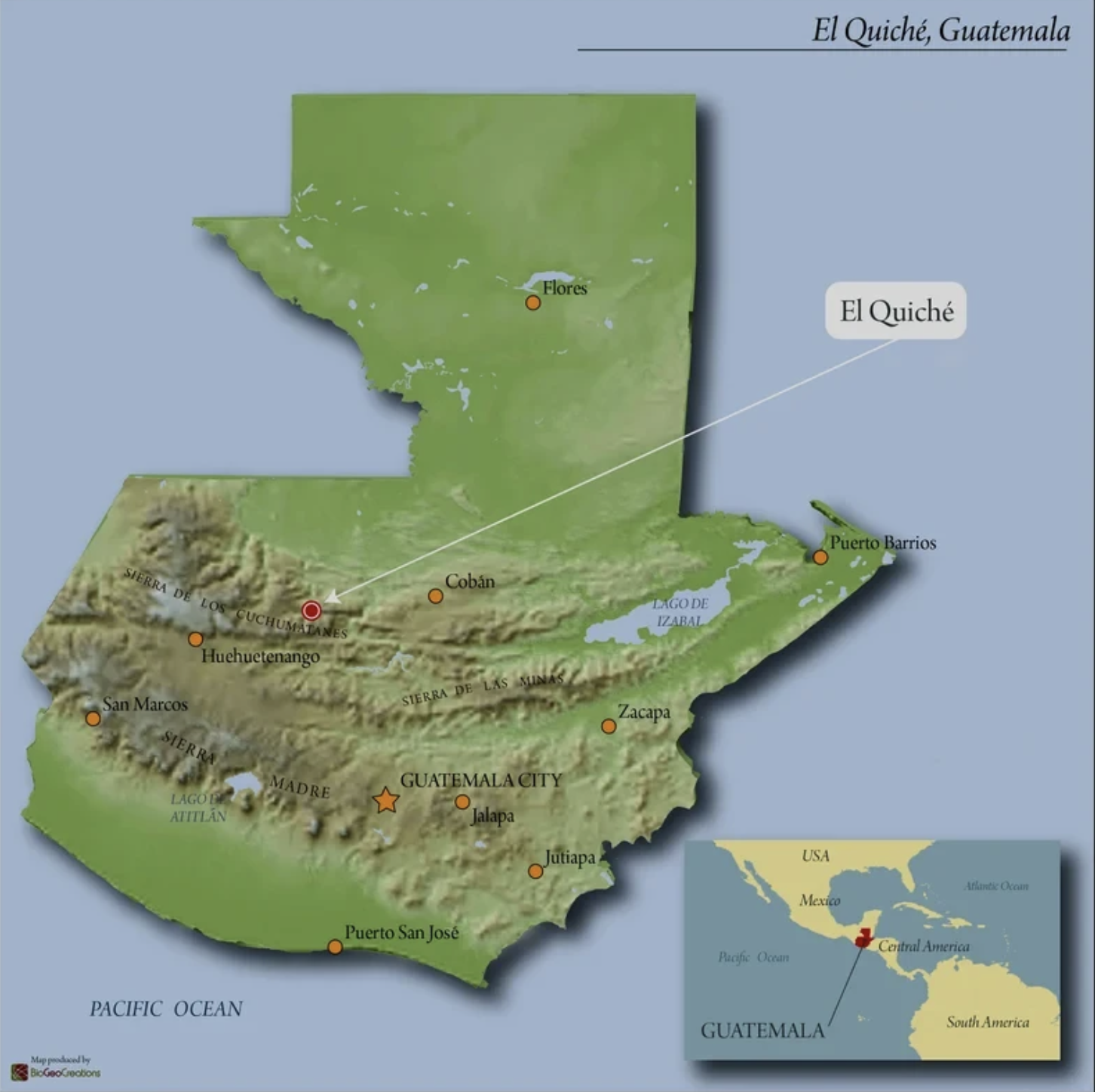
Quiché is one of Guatemala's largest coffee departments, stretching from the volcanic range near Chimaltenango all the way north to the Mexico border. The northern half is mostly tropical lowland, but the south is mountainous. Two ranges - the Sierra de los Cuchumatanes and the Sierra de Chuacús - run through it, creating a lot of high-elevation pockets that are great for growing coffee.
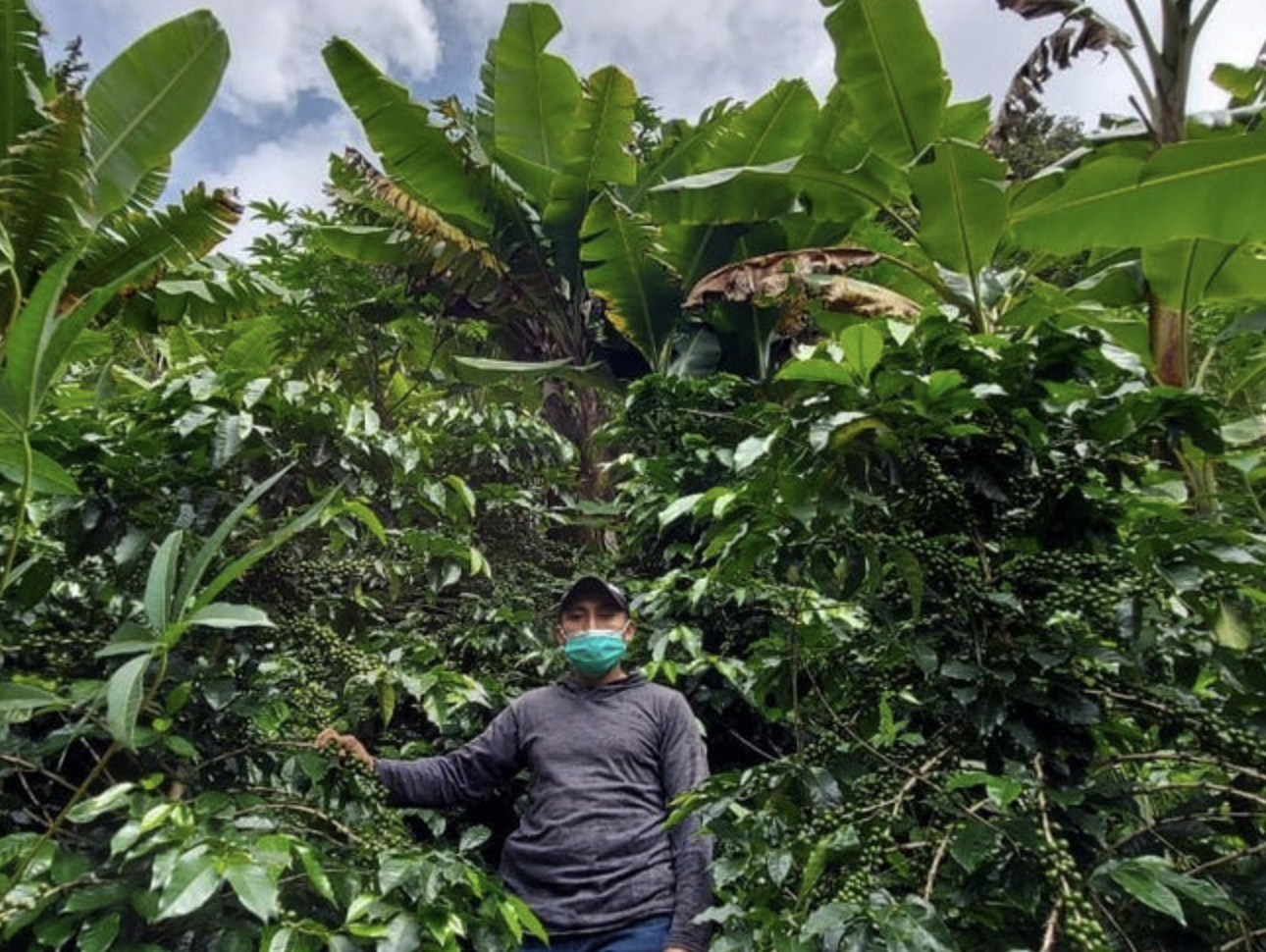
The department is named for the K'iche' people, one of Guatemala's largest Indigenous groups, and today more than 65% of Quiché's population is K'iche'. Around Joyabaj, coffee grows between 1,300 and 2,000 meters above sea level in clay loam soil. Most farms here are under 2 hectares, with coffee planted alongside the crops families grow to eat.
The Joyabaj Wet Mill
For a long time, the farmers around Joyabaj didn't have anywhere central to process their coffee. Investment in the region went elsewhere, and a lot of people left to find work in other parts of Guatemala or in the United States, which took experience and labor out of the area. The farms that remained were left exposed to low prices with little money to put back into their land.
That changed when Federación Comercializadora de Café Especial de Guatemala (or FECCEG), a specialty exporter that represents smallholder associations across the country, decided to build a wet mill here. FECCEG had worked with growers in nearby Chimaltenango for years and always believed in Joyabaj's potential. Farmers in the area have a long habit of picking only fully ripe cherries and sorting carefully at harvest.
FECCEG worked with community leaders to pick the site and settled on the center of Joyabaj, where it's easiest to run and maintain the mill and keep it safe.
The mill opened in January 2021… and by April 2021, it had processed its first 5,000 quintales of parchment (about 2,400 bags of exportable green coffee)! Today it serves 1,550 smallholder farmers. And because not every farm can haul its own pickings, couriers from the community collect cherries and bring them in.
How it's processed
At the mill, the cherries are sorted by density in a siphon tank. For naturals like this one, the whole cherries are fermented while the team monitors pH, then moved straight onto raised beds to dry in the sun. The team turns the cherries by hand throughout drying so everything dries evenly. Once dry, the coffee goes to FECCEG's dry mill in Quetzaltenango, where it's coded and stored for quality assessment.
This lot is a mix of Anacafé 14, Bourbon, Catimor, Caturra, Red and Yellow Catuaí, and Typica. Drying the coffee inside the fruit is what gives it so much of that jammy, dark-fruit sweetness.
What we love about Guatemala Chuaquenun Natural
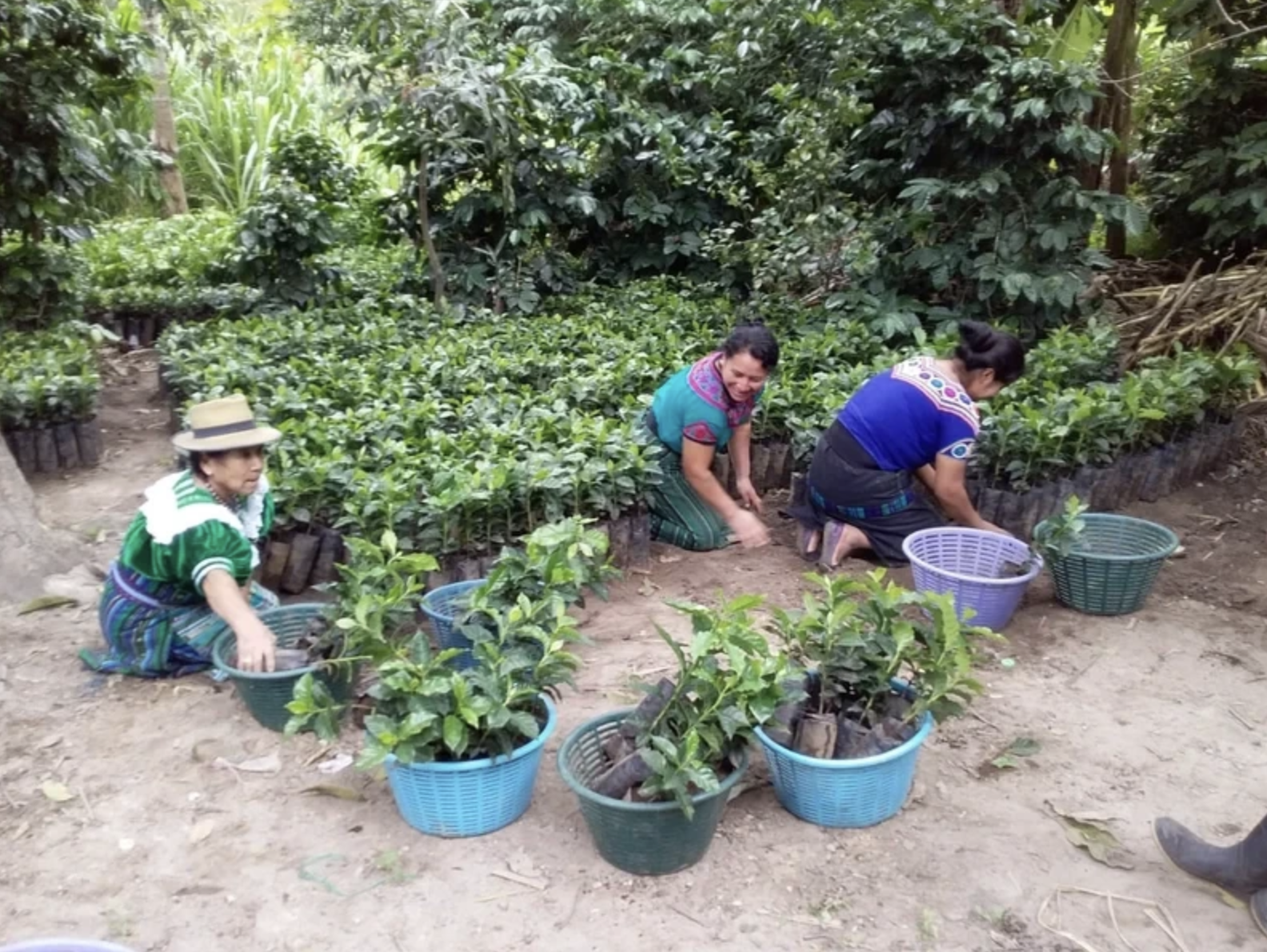
The mill isn't just about getting good coffee out of Joyabaj… FECCEG's long-term plan includes technical help for farmers, organic certification, entrepreneurship training for women, and community nurseries to replant aging coffee trees.
This is precisely the kind of coffee the Bean Juice Club was made for: a small lot from a community that hasn't had much access to the specialty market until recently.
How to get it
The Guatemala Chuaquenun Natural ships to Bean Juice Club subscribers this month. A limited amount will also be available at the roastery at 412 Peterboro and online while it lasts. You can sign up for the Bean Juice Club here.
As always, the label art is by David McGuffie. Go check out his work!