
Inside Sebastián Ramírez’s IPA Caturra: A Colombian Coffee Fermented with Hops
I’m excited to share one of the more unique Colombian coffees I’ve had in a while: Colombia Quindío Honey IPA Caturra, produced by Sebastián Ramírez at El Placer in Quindío, Colombia.
This is not a flavored coffee, and it does not taste like beer. It is a coffee processed with a hop-infused mosto culture, creating a cup that is tropical, floral, citrusy, sweet, and wildly aromatic.
The flavor notes are super expressive — dried mango, chamomile tea, cantaloupe, berry Capri-Sun, citrus, lemongrass, and a soft floral sweetness — but none of that really makes sense until you understand what happened to the coffee after it was picked.
Why is it called IPA Caturra?
The “Caturra” part is the coffee variety. The “IPA” part comes from Sebastián’s love of beer and the hop-infused fermentation culture used during processing.
When I asked Sebastián about the hops, he told me:
“The exact hop blend is part of our proprietary process, but the goal is not to make the coffee taste like beer. Instead, we use the hops to enhance complexity, sweetness, and aromatic expression while maintaining clarity in the cup.”
The hops are not there to make the coffee taste like beer, or turn the coffee into beer (though, that would be pretty cool, ha). They’re there to help shape the aromatic expression of the coffee during fermentation- more citrus, more floral notes, more complexity, and more sweetness, while still keeping the cup clean and recognizable as coffee.
*Sebastían was nice enough to take time out of his day to message with me on Instagram about this coffee. More about Sebastían further down.
The variety: Caturra
As I mentioned above, the variety used for this lot is Caturra, which is a natural mutation of Bourbon. Caturra is known for being a smaller, more compact plant. The name even comes from a word meaning “small.” It became popular throughout Latin America because it can be productive and manageable for farmers, while still having the sweetness, brightness, and structure people love from Bourbon-related varieties.
In the cup, Caturra can be sweet, balanced, citrusy, and clean. But with a process like this, Sebastián is pushing the variety into a much louder and more expressive place. The coffee still has the structure of a Colombian Caturra, but the processing brings out these huge tropical, floral, and citrus aromatics.
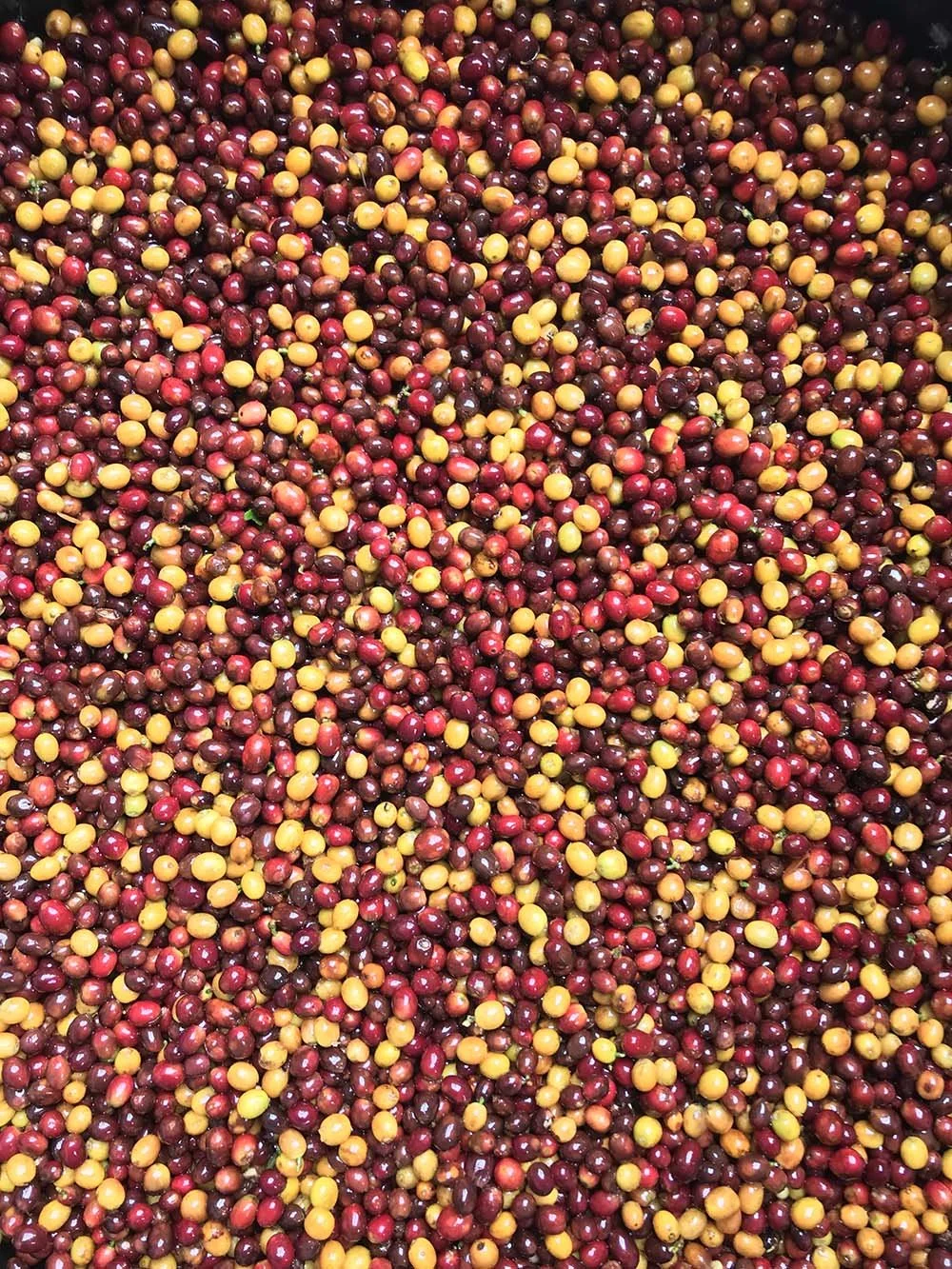
For this coffee, ripe Caturra cherries are handpicked and carefully sorted. That part is important because with a long, controlled fermentation like this, the starting material matters a lot. If underripe, damaged, or inconsistent cherries go into the tank, those problems can get magnified later.
Sebastían is building flavor through fermentation, but he’s starting with clean, sweet, ripe fruit.
The process, simplified
Before getting into the nerdier details, here’s the basic flow of how this coffee is processed:
Ripe Caturra cherries are handpicked and sorted.
The whole cherries ferment in sealed tanks with CO₂ for 100 hours.
The coffee is depulped via Honey Process, leaving some of the sticky mucilage on the seed.
The depulped coffee goes through a second 100-hour fermentation with CO₂ and a hop/mosto culture that Sebastián created.
The coffee is dried slowly on patios and under shade.
The dried coffee is stabilized before milling, export, and roasting.
That’s the short version. The long version is where it gets interesting.
Stage 1: 100 hours of carbonic maceration
After harvest, the whole cherries go into sealed tanks filled with CO₂ for a 100-hour carbonic maceration.
Carbonic maceration is a technique borrowed from winemaking, where whole fruit is placed in a low-oxygen, carbon-dioxide-rich environment. Instead of immediately breaking the fruit open, fermentation begins inside the intact fruit itself. In coffee, this can help push fruit character, sweetness, aromatic intensity, and acidity while giving the producer more control over temperature, pH, and time.
That control is a big part of what makes coffees like this possible. Fermentation is not just “letting coffee sit around.” In more advanced processing, producers are managing the environment very carefully: oxygen, time, temperature, pressure, microbial activity, and the condition of the fruit all matter.
For this IPA Caturra, that first 100-hour fermentation helps start building the fruit intensity and aromatic complexity that show up in the finished cup.
Stage 2: honey processing
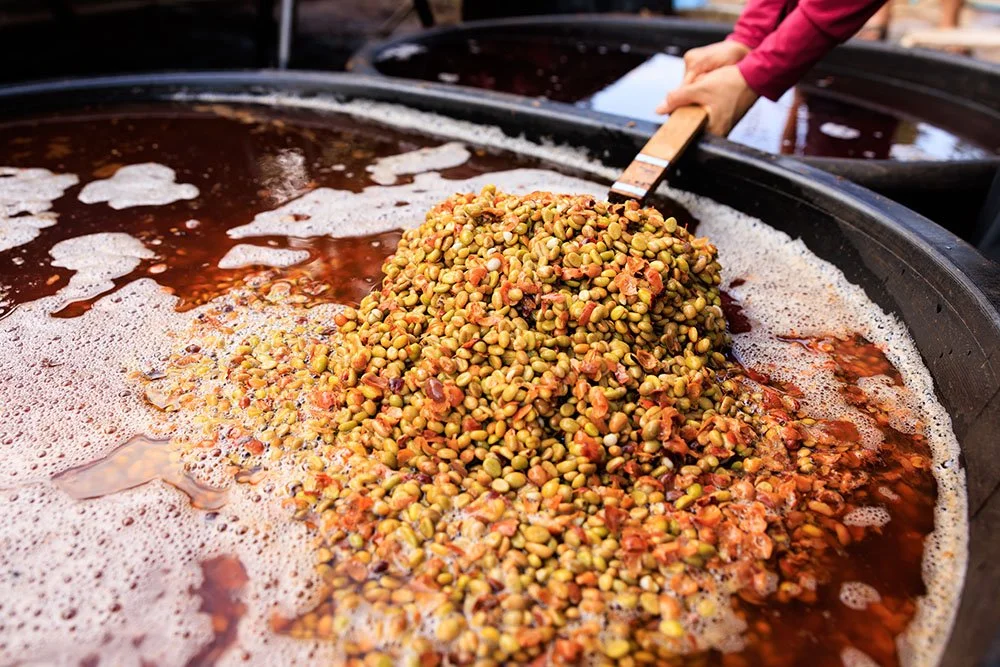
After the first 100 hours, the coffee is depulped. That means the outer fruit skin is removed, but some of the sticky mucilage remains on the seed. This is where the coffee becomes a honey process.
Honey process does not mean honey is added. It means the coffee is dried with some of that sweet, sticky mucilage still attached.
In general, honey processed coffees sit somewhere between washed and natural coffees:
Washed coffees are usually cleaner, brighter, and more structured.
Natural coffees are usually fruitier, heavier, and more fermented in character.
Honey processed coffees often land somewhere in the middle, with more sweetness and body than a washed coffee, but more clarity than a natural.
For this coffee, the honey process helps preserve sweetness and body while still allowing the fermentation profile to come through clearly.
But Sebastián doesn’t stop there.
Stage three: 100 more hours with hop-infused mosto
Once depulped, the coffee is sealed in tanks again for another 100-hour fermentation, this time with CO₂ and a hop/mosto culture.
This is probably the nerdiest part of the whole coffee, and it’s also the part that makes the name IPA Caturra make sense.
In coffee processing, mosto refers to the liquid released from coffee cherries during fermentation.. basically a thick, sugary coffee-cherry juice full of organic compounds and active microbes. Some producers use mosto almost like a sourdough starter. Instead of relying only on whatever microbes happen to be present on the fruit, in the tank, or in the environment that day, they introduce a living culture from an existing fermentation to help guide the next one.
This is similar in concept to starter cultures used in other fermented foods and drinks: you’re giving the fermentation a push in a particular direction, which can make the process more controlled, more repeatable, and more expressive.
Tom who owns Sweet Maria’s has written about how selected microbes in coffee fermentation can help degrade mucilage, tolerate fermentation stress, suppress unwanted organisms, and improve sensory quality.
Lucia Solis, a coffee processing specialist who focuses on microbes and fermentation, has a helpful way of explaining the difference between fermentation and flavoring. In an interview with Boss Barista, she says, “Fermentation is not that infusion—fermentation is flavors that are generated from a metabolism and not like essential oil drops that you're putting into the tank or something like that.”
That distinction is important here. The hop/mosto culture is not meant to make the coffee taste like beer in a literal way. It is part of the fermentation environment, helping guide aromatic complexity before the coffee is dried, milled, roasted, and brewed.
That’s the general idea here: not just letting fermentation happen, but trying to shape it.
For this coffee, Sebastián takes these ideas and runs it through the lens of beer. The mosto culture he created is infused with hops, which is where the IPA reference comes from. IPAs are known for hop-driven aromatics — citrus, tropical fruit, florals, herbs, sometimes pine or bitterness — and Sebastián, who loves beer, wanted to explore how that aromatic world could interact with coffee fermentation.
The hops are not the main food source for fermentation. The coffee mucilage and cherry sugars are doing that work. But hops sitting in the fermentation environment can still contribute aromatic complexity and help shape the sensory direction of the coffee.
So the goal is not to make a flavored coffee in the traditional sense, and it’s not the same as adding flavoring after roasting. It is more like a controlled co-fermentation: ripe Caturra cherries, coffee-derived mosto, CO₂, time, and hops all interacting before the coffee is dried.
That’s why the final cup can taste so bright and unusual in the best way — citrusy, tropical, floral, a little herbal, and intensely aromatic — while still tasting like coffee. It has some of the energy of an IPA, but filtered through Caturra, honey processing, and Sebastián’s fermentation protocol.
Drying and stabilization
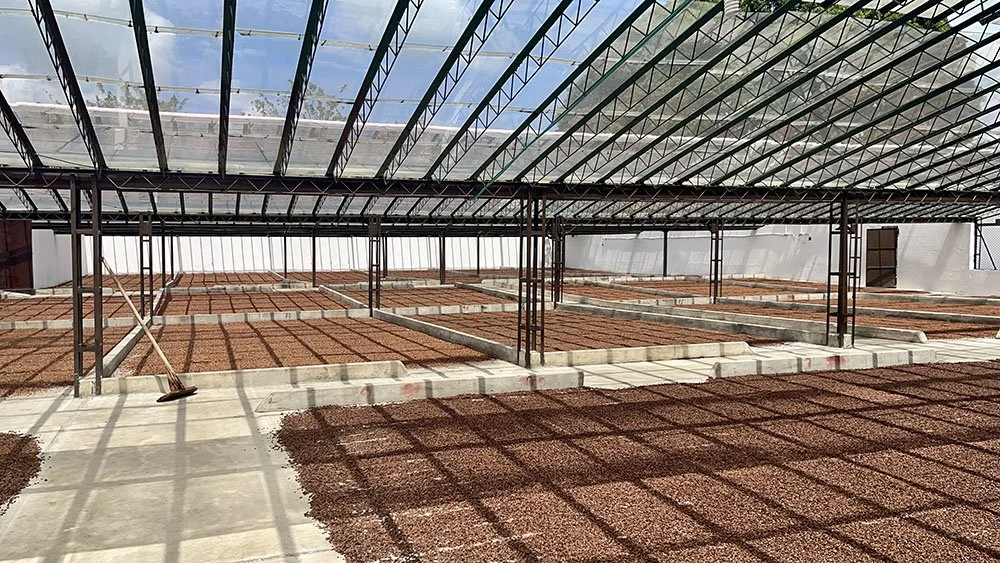
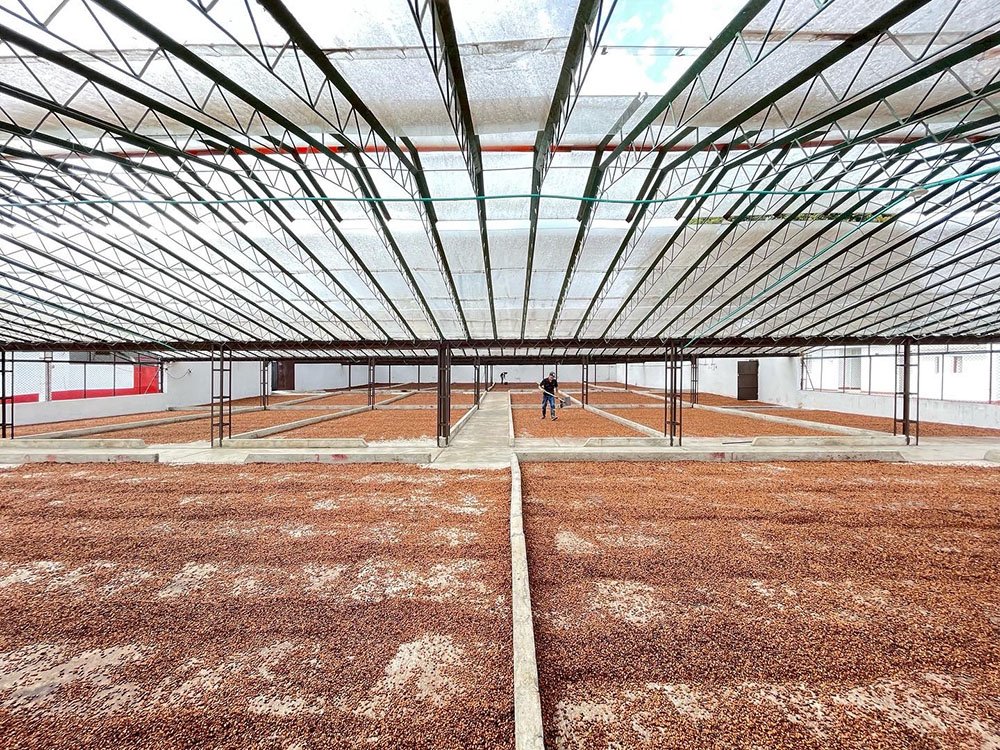
After the second 100-hour fermentation, the coffee is dried slowly in open patios, called elbas, with controlled temperature around 40°C, and a shaded drying phase that lasts around five days. The full drying process can take up to 30 days.
This slow drying matters because drying is not just “getting the coffee dry.” It is the stage where all of the work from fermentation needs to be preserved.
Dry too fast and the coffee can become unstable or uneven. Dry too slowly or carelessly and you risk mold, over-fermentation, or faded flavor. With highly processed coffees like this, drying is one of the most important parts of keeping the cup clean and expressive instead of muddy or overdone.
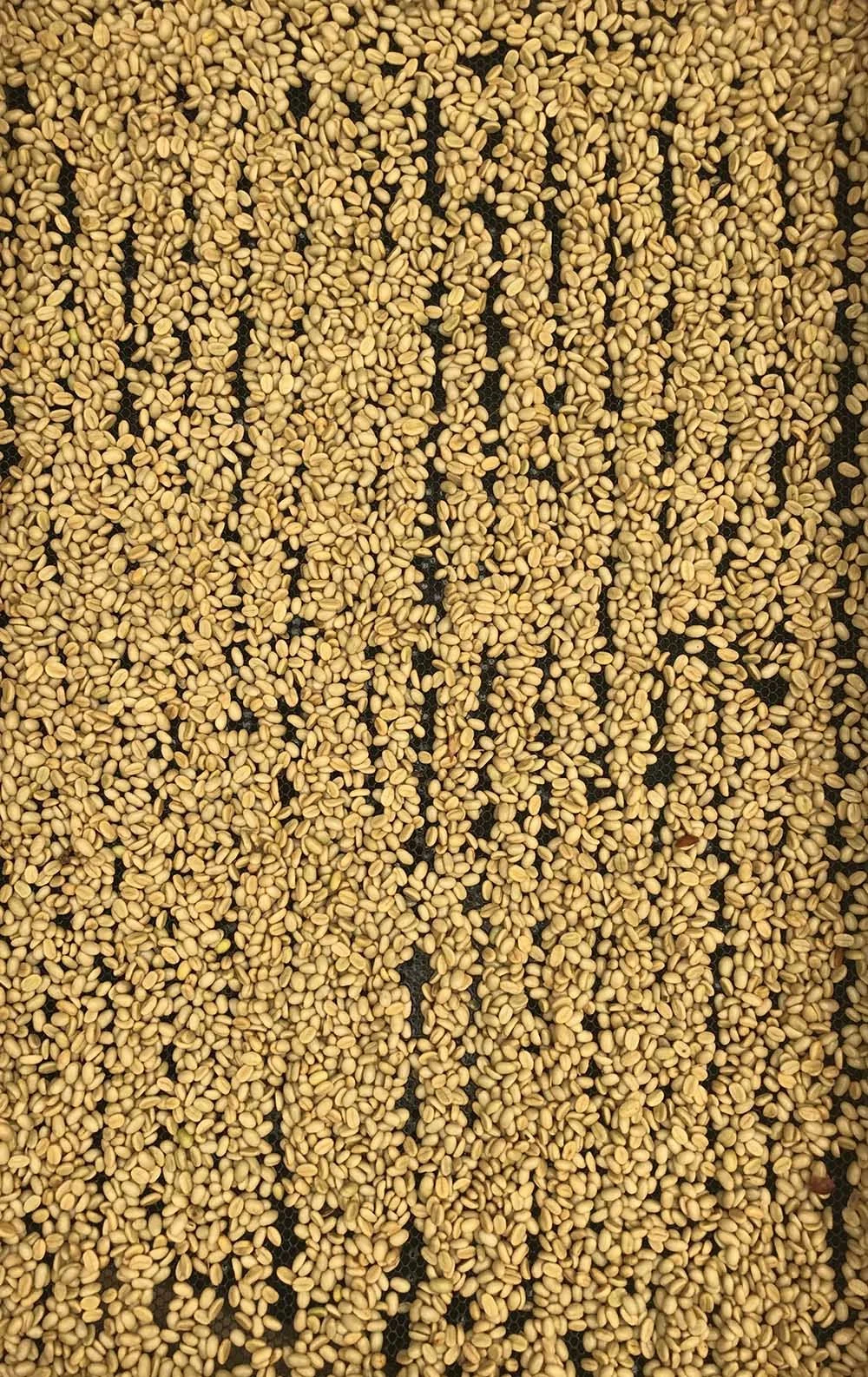
Once dried, the coffee is stabilized for another 15 days. Stabilization gives the moisture inside the coffee time to even out before milling, export, and roasting. It is not the flashiest part of the process, but it is one of those behind-the-scenes steps that helps a coffee arrive tasting intentional instead of chaotic.
What does it taste like?
In the cup, this coffee is tropical, floral, and citrusy, with notes of:
Dried mango 🥭
Chamomile tea 🌼
Cantaloupe 🍈
Berry Capri-Sun 🧃
Lemongrass 🍋🌾
Citrus 🍊
Soft honey-like sweetness 🍯
The IPA inspiration shows up more as aroma and brightness than flavor. Again, it does not taste like beer. It tastes like a super expressive Colombian coffee with a hop-adjacent aromatic lift.
It’s juicy, sweet, floral, and a little herbal. It has a lot going on, but the cup still has clarity. That’s the part I appreciate most. Sometimes heavily fermented coffees can become one-note, boozy, or overwhelming. This one is definitely wild, but it still feels composed.
Who is Sebastián Ramírez?
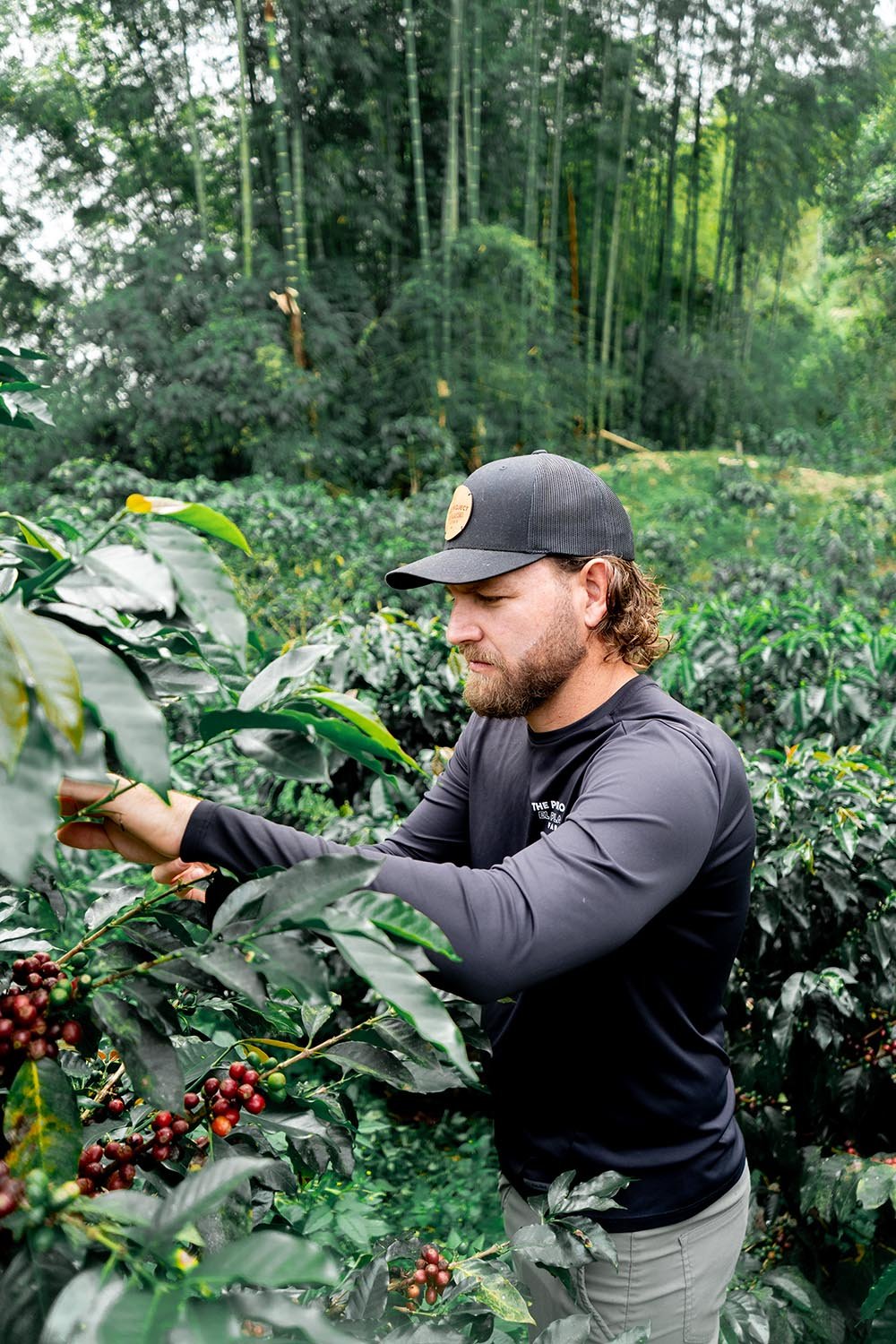
Sebastián Ramírez has become one of the more renowned producers in Colombia because he approaches coffee like both a farmer and a flavor designer.
He is a fourth-generation coffee producer, but El Placer functions as much like a processing and innovation facility as it does a traditional farm. He works with varieties like Caturra, Pink Bourbon, Gesha, Wush Wush, Sidra, Typica Mejorado, Papayo, and SL-28, and he has become especially known for carbonic maceration, co-ferments, and extremely detailed processing protocols.
What makes Sebastián’s coffees stand out is not just that they are “funky” or experimental. It’s that they are specific. They are built with a clear flavor goal in mind. The processing is detailed, repeatable, and intentional, and you can taste that in the cup.
How this coffee got to Craig’s Coffee
I was connected to Sebastián and El Placer through Unblended, a Colombian green coffee exporter that works with younger producers and helps represent coffees like this to roasters.
They have been super helpful in giving me access to coffees that would otherwise be really difficult for a small roaster in Detroit to find. For this coffee, I rely on Unblended on the exporting side, and Algrano on the importing and logistics side.
That kind of supply chain matters because coffees like this are not commodity coffees. They are small, specific, highly processed lots that need traceability, communication, and careful handling from producer to roaster.
It also matters because I want to buy coffees with clear sourcing relationships. I want to know who produced the coffee, how it was processed, how it got here, and why it tastes the way it does. Unblended helped make that connection possible, and Algrano helped make the importing side possible.
This process is as close to “direct trade” as you can get. All the prices of the coffee, the exporting and importing fees, and the shipping fees, are all laid out on the table. It’s the transparency that folks like me in specialty coffee always talk about.
Why this coffee is exciting
What makes this coffee exciting to me is that it is not just “a funky coffee.” It is a very intentional coffee.
Every stage is designed to build a specific cup profile:
Ripe Caturra selection for sweetness and clarity
100 hours of whole cherry carbonic maceration for fruit intensity
Honey processing for sweetness and body
100 more hours with hop-infused mosto for aromatic complexity
Slow drying to preserve the fermentation work
Stabilization to keep the coffee consistent before export and roasting
It’s bright, tropical, floral, citrusy, and unusual in the best way — the kind of coffee that reminds you how creative modern coffee processing can be.
If you’re into experimental coffees, anaerobic fermentations, fruit-forward Colombian coffees, or anything produced by Sebastián Ramírez, this is one to try.
Come by the roastery during retail hours to try it as a pour over and/or espresso.
You can also snag a bag in store or online.
Cheers 🍻