How to Make Cold Coffee: Cold Brew vs. Flash Brew
Cold coffee can mean a lot of things: cold brew concentrate, iced coffee, flash brew, Kyoto-style slow drip, yesterday’s hot coffee poured over ice, and a few other methods that range from great to not great.
For this guide, we’re focusing on two methods that are actually worth making at home:
Cold Brew coffee — coffee steeped in cold water for 24–72 hours, then filtered and diluted to taste.
Flash Brew (or Flash Chilled) coffee — hot coffee brewed directly over ice, inspired by Japanese iced coffee methods.
Both make cold coffee, but they don’t taste the same.
Cold brew is usually heavier, rounder, and bolder. Flash brew is lighter, brighter, and more refreshing. One takes a day to brew (or in my case, three days). The other takes about as long as making a regular pour-over.
The difference comes down to extraction, which is determined by:
brew device
brew recipe
grind size
water temperature
brew time
dilution (coffee to water ratio)
and, of course, COFFEE!
Part One: How to Make Cold Brew Coffee
Cold brew is made by steeping ground coffee in cool or cold water for an extended period of time. Instead of using heat to quickly extract flavor, cold brew uses time.
The basic idea is simple: combine coffee and water, let it sit, strain it, then dilute it to taste.
Brewers to Make Cold Brew
For cold brewers, you can use things as simple as a mason jar, or highly advanced machines like the Cumulus Cold Brewer.
However, here are my preferred cold brewers in no particular order
Hario Mizudashi (or any of Hario’s at home cold brewers, they use a metal mesh filter )
Ovalware Cold Brewer (metal mesh filter, and great because it cuts off oxygen)
OXO Compact Cold Brewer (uses paper filters)
Toddy Home Cold Brew System (also uses a paper filter)
French Press and any drip cone (like a Hario v60) to filter it after it’s steeped. This metod is my personal favorite. It takes a while and is a bit laborious, but I have French Press and drip cone on hand (like most coffee nerds), so there’s no need purchasing new brewing gear.. only if you want to 😜
Different brewers will yield a slightly different taste and texture. For example, the Hario cold brewers use metal mesh filters which allow more coffee particulates to be present in the final brew. VS the Toddy Cold Brewer which uses a paper filter and presents a cleaner, less gritty cup.
My Cold Brew Method
I start with a 1:8 coffee-to-water ratio.
That means:
100 grams coffee
800 grams / mL water
Or, for a larger batch (using a full 12.1 oz / 345 gram bag):
345 grams coffee
2,760 grams / mL water
This produces a strong cold brew concentrate. From there, I usually dilute it until the final drink lands closer to a 1:10 or 1:12 ratio, depending on the coffee and how strong I want it. Usually I dilute with ice.
A 1:8 cold brew will taste heavier and stronger than a flash brew. Not “dark roast strong,” necessarily, but strong in the sense that the coffee flavor is concentrated, round, and full.
The Roastery recipe:
2,800 grams of coffee
22,000 ml of water
We steep for 72 hours inside a paper filter, inside a mesh filter, inside a 6 gallon Ale Pail so I can limit the amount of oxygen and oxidization that occurs. Then add 1 gallon of water once strained, creating close to a 1:9 brew ratio.
A Standard Cold Brew Recipe
Ingredients
See above for reference on volume
Method
Grind to your coarseness setting (see below for tid bits on grind size)
Add the coffee to your brew device.
Add filtered water and make sure all the grounds are saturated.
Cover and place in the fridge.
Steep for 24–72 hours (I prefer 72 hours for the body and flavor profile)
Remove the grounds or strain through a filter.
Dilute with water to taste. Start by adding enough water to bring the final ratio closer to 1:10 or 1:12.
Serve over ice.
Grind Size
Most Cold Brew Recipes call for a coarse grind (similar to a French Press or Percolator).
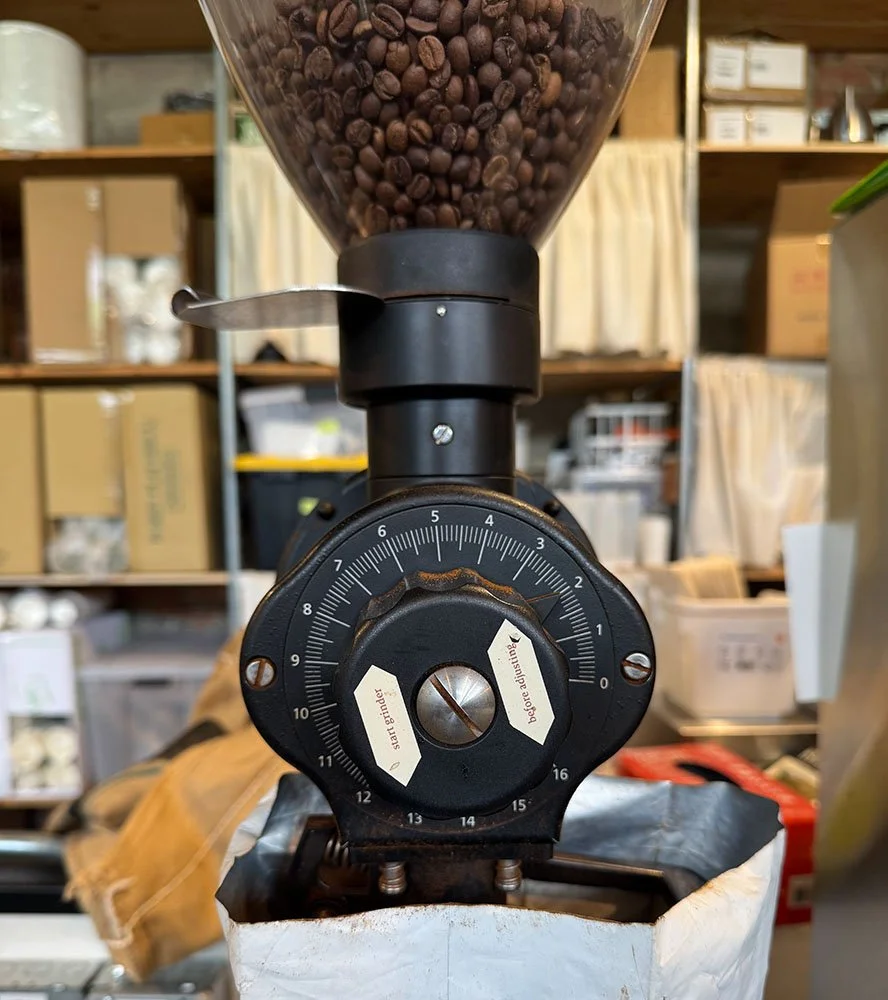
However, after years of playing around with recipes, I prefer to grind my Cold Brew on a fine setting, close to an espresso grind. I’ve found that this creates a more rounded, cleaner flavor profile. Because extraction happens more quickly, I find that the taste is also silkier.
For reference, on a home grinder like the Baratza Encore, that would be close to the finest setting, 2-4. at the cafe, we use size “2” on the Mahlkonig EK43.
Water Temperature
I use room temp water (always filtered water!) and then place the cold brewer in the fridge so the water stays cold throughout the entire brewing process.
How Long Should Cold Brew Steep?
Most cold brew recipes suggest somewhere between 12 and 24 hours. Commercial and home recipes vary quite a bit. One pilot study on cold brew practices found that the median extraction time among respondents was 16 hours, with many brewing between 14 and 26 hours, and a smaller group brewing much longer.
My preferred steep time is 72 hours, but that does not mean caffeine keeps extracting at the same rate for three full days.
A 2017 study on cold brew extraction found that caffeine and 3-CGA, one of the major chlorogenic acids in coffee, reached equilibrium in cold brew samples around 6–7 hours. In plain English: a lot of the caffeine extraction happens relatively early, and after that, extra steeping time is mostly changing flavor, body, and the balance of other compounds.
So by the time you hit 18 hours, most of the caffeine extraction has likely already happened. Brewing longer than that is not about “adding more caffeine” as much as it is about changing the flavor profile.
Why Steep Longer?
Longer steeping can create:
More body
More roundness
A heavier mouthfeel
More developed sweetness
A stronger, more concentrated coffee flavor
But there is a limit. Steep too long, especially with too fine of a grind, too much agitation, too much oxygen exposure, or equipment that is not fully clean, and cold brew can start tasting flat, woody, bitter, or stale. In the worst cases, it can pick up unpleasant “old coffee” flavors.
That is why filtration, cleanliness, temperature, and oxygen exposure matter.
The Science: Why Cold Brew Tastes Different
Hot water and cold water do not extract coffee the same way.
Hot water extracts compounds quickly: acids, aromatics, sugars, oils, caffeine, bitter compounds, and soluble solids. Cold water extracts more slowly and more selectively. Research comparing hot and cold brew has found that cold brew tends to show lower titratable acidity, lower concentrations of some browned compounds, and fewer total dissolved solids than hot brew made from the same coffee.
That is part of why cold brew often tastes smoother and rounder. It is not necessarily because it is dramatically less acidic in terms of pH. In one Scientific Reports study, hot and cold brew coffees had similar pH values, ranging from 4.85 to 5.13, but hot brew had higher total titratable acids and higher antioxidant activity.
That distinction matters. When people say cold brew is “less acidic,” they often mean it tastes less sharp or less bright. Chemically, the pH may be similar, but the acid composition and perceived acidity can be different.
How Cold Brew Feels in the Body
Cold brew can feel smoother because it often has less perceived acidity and a heavier body. That does not mean it is automatically gentler for everyone, and it does not mean it has less caffeine.
Caffeine depends on the coffee dose, brew ratio, extraction, and how much concentrate you drink. A cold brew concentrate can easily have more caffeine per serving than a standard cup of hot coffee if it is not diluted much.
The main difference is sensory: cold brew usually tastes rounder, lower-acid, heavier, and less aromatic than hot-brewed coffee served cold.
Other Cold Brewing Methods
Immersion cold brew is the easiest method, but it is not the only one.
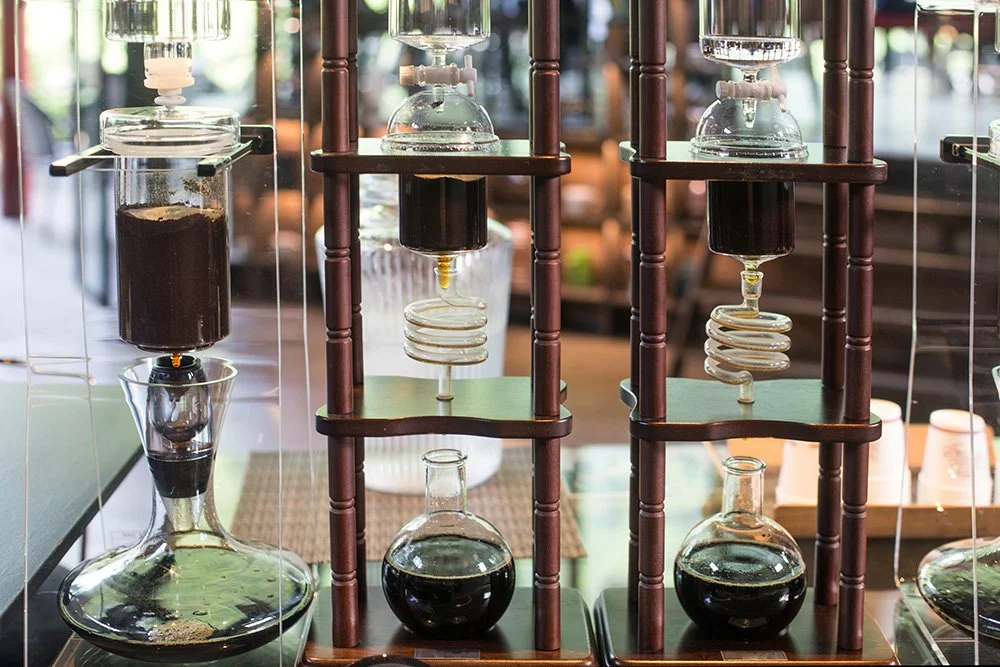
Another beautiful method is the Yama tower, or Kyoto-style slow drip. Instead of fully immersing coffee grounds in water, a slow-drip tower lets cold water fall drop by drop through a bed of coffee. This method can take several hours and often produces a lighter, more aromatic cold coffee than full-immersion cold brew. Serious Eats describes Japanese-style slow-drip brewers as producing a concentrate with more delicate flavor and lighter body than full-immersion methods.
The downside is that the equipment is larger, more expensive, and more involved to clean. The upside is that it looks great and can make a very elegant cold coffee.
Part Two: How to Make Flash Brew Coffee
Flash brew, also called Japanese iced coffee or flash-chilled coffee, is a different approach.
Instead of steeping coffee in cold water for hours, you brew hot coffee directly over ice. The hot water extracts flavor quickly, and the ice chills the coffee immediately.
The result is cold coffee that tastes more like a crisp, clean pour-over than a traditional cold brew.
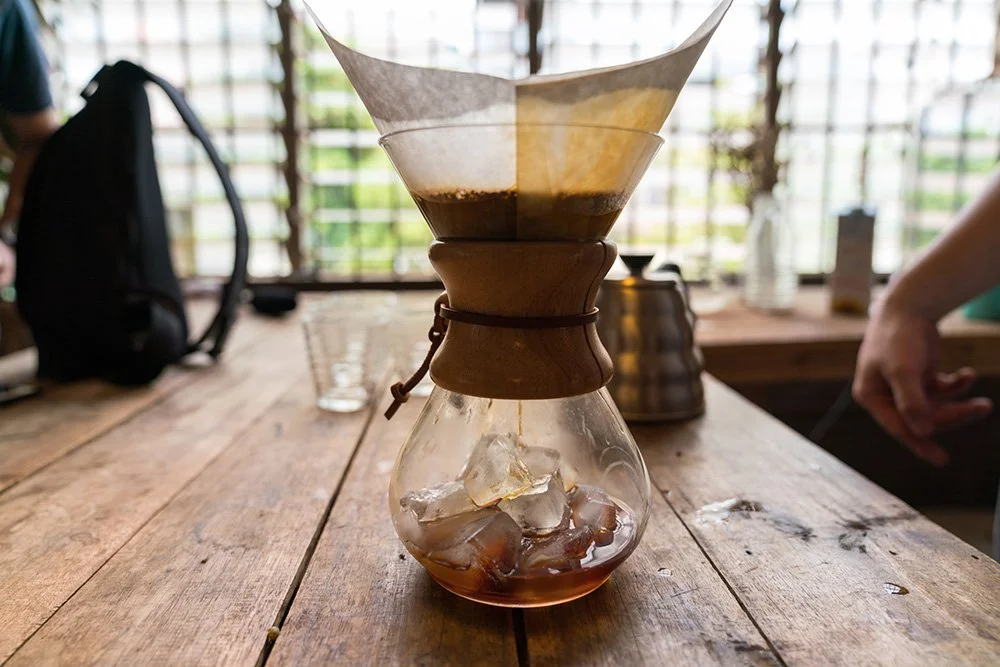
Brewers to Make Flash Brew
Pretty much anything you brew hot coffee in can make flash brew! Including drip cones, coffee pots, french presses… you name it! This is because you’re still brewing the coffee hot, but over ice.
My Flash Brew Recipe
For flash brew, I use a final 1:16 coffee-to-water ratio, similar to a traditional hot pour-over.
The difference is that only half the water is used as hot brewing water. The other half is ice.
The brewing portion is concentrated at 1:8, and then the ice melts into the coffee, bringing the final drink to 1:16.
A simple recipe:
25 grams coffee
200 grams hot water
200 grams ice
That gives you:
25 grams coffee
400 grams total water
Final ratio: 1:16
You can scale this up or down.
Grind Size
Grind about 15–20% finer than you would for a normal pour-over.
Because you are using less hot water during the brew phase, the water has less contact time and less total volume to extract the coffee. A slightly finer grind helps increase extraction.
Do not go espresso-fine. You still want water to flow through the coffee bed at a steady pace.
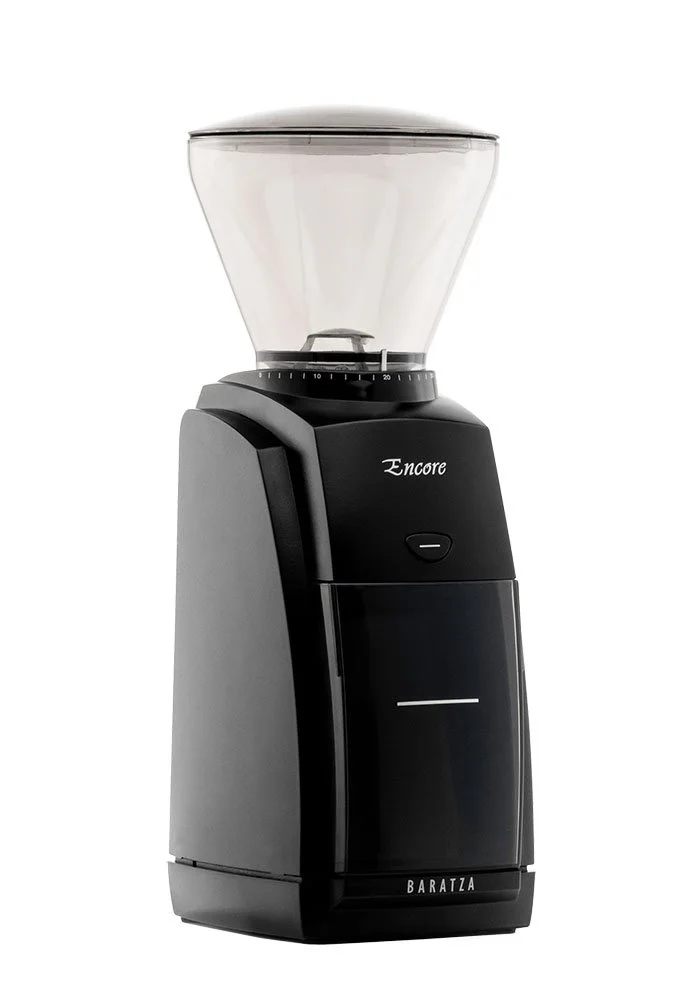
For example, I use a size 12 grind size on my Baratza Encore when making a pour over. When making a flash brew I use grind size around 9.
Water Temperature
Use water between 195–205°F pending on the coffee. There’s a lot of new science on grind size and how it correlates to the roast level. For all of my coffees I roast in house, I like my water around 202 - 203°F.
That range is widely used for hot coffee brewing because it is hot enough to extract sweetness, acidity, and aromatics efficiently without pushing the brew too harsh or bitter. The Specialty Coffee Association has also noted that brew temperature is considered a key variable in coffee quality, with temperatures near 93°C / 199°F commonly treated as a practical target. (I use 202-203º because by the time the water leaves the kettle and hits the coffee, its around 199-200º)
Basic Flash Brew Recipe
Ingredients
25 grams coffee
200 grams hot water
200 grams ice
Method
Place 200 grams of ice in your carafe, server, or coffee pot.
Grind 25 grams of coffee slightly finer than your normal pour-over grind.
Place your filter and coffee in a drip cone, pour-over brewer, or coffee maker basket.
Brew with 200 grams of hot water between 195–205°F.
Let the coffee drip directly onto the ice.
Swirl to melt the remaining ice and even out the temperature.
Serve immediately.
This method works with a V60, Kalita, Chemex, automatic drip machine, or any basic drip cone. The main thing is keeping the ratio correct: brew strong with hot water, then let the ice complete the dilution.
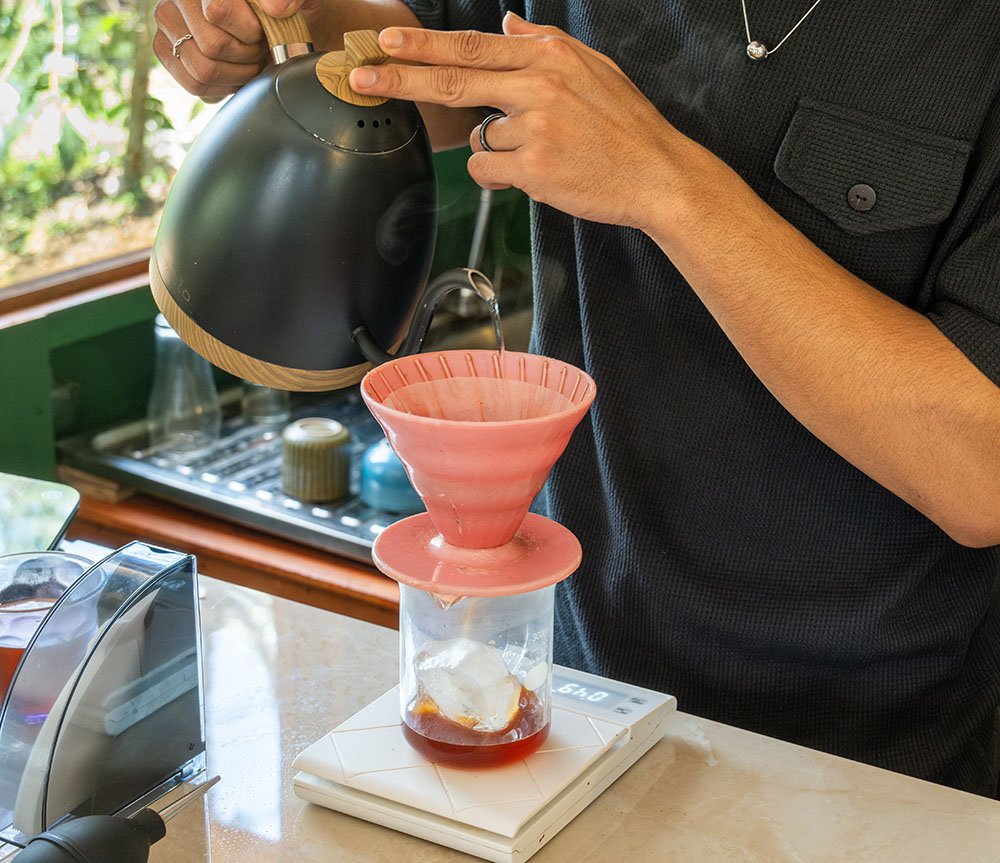
Why Flash Brew Works
Flash brew works because hot water is very good at extracting coffee flavor.
Hot water pulls out aromatic compounds, acids, sugars, and soluble flavor compounds much faster than cold water. When that hot coffee lands on ice, it chills quickly instead of slowly cooling on a counter or in a fridge.
That rapid chilling is part of the appeal. Coffee flavor changes as it cools, and volatile aromatic compounds can dissipate over time. Flash brewing captures more of the brightness and aroma of a fresh hot brew while immediately turning it into an iced drink. Coffee professionals often describe this as one of the main advantages of Japanese-style iced coffee: hot extraction gives complexity, while immediate chilling keeps the final cup crisp and fresh.
This is why flash brew often tastes more refreshing than cold brew. It has more of the acidity and aroma you expect from a hot pour-over, but it drinks cold.
Why Is It Called Japanese Flash Brew?
Flash brew is often associated with Japanese iced coffee because the method became popular through Japanese-style iced coffee recipes: brewing hot coffee directly over ice rather than brewing hot coffee, letting it sit, and chilling it later.
The exact history is a little fuzzy, and it is better to avoid claiming that one person “invented” it. But the method is widely referred to as Japanese iced coffee because Japanese cafes and brewing culture helped popularize the direct-over-ice approach. Coffee & Tea International describes flash brew as originating in Japan in the 1960s and often being known as Japanese iced coffee.
Today, the name usually refers to the technique more than a strict recipe: hot coffee, brewed stronger than usual, directly over ice.
What Should Flash Brew Taste Like?
Flash brew should taste:
Bright, clean, refreshing, Light-bodied, aromatic, crisp, and similar to a hot pour-over, but cold
It should not taste watery. If it does, your grind may be too coarse, your brew water may be too low, or you may be using too much ice. It should also not taste harsh. If it does, your grind may be too fine, your water may be too hot, or your brew time may be dragging too long. Flash brew is especially good for coffees with fruit, floral, citrus, tea-like, or delicate notes. Cold brew can flatten some of those flavors. Flash brew keeps them more intact.
[photo]
Can You Make Flash Brew Stronger?
Yes! The 1:16 recipe is designed to mimic the strength of a traditional hot pour-over, just cold. If you want something stronger, you can change the ratio.
Try:
25 grams coffee
200 grams hot water
150 grams ice
That gives you a stronger final drink because the total water is lower. You can also use more coffee, less ice, or slightly less brew water. Just remember: the less ice you use, the less chilling power you have. If the coffee does not chill quickly enough, it can taste more like hot coffee that got watered down rather than a true flash brew.
Remember, coffee flavor is subjective (like most foods). Whatever method makes the coffee taste the best should be your preferred method.
Cold Brew vs. Flash Brew: What’s the Difference?
Cold brew and flash brew are both cold coffee, but they are built differently.
Cold brew uses cold water and time. Flash brew uses hot water and ice.
Cold brew usually tastes heavier, smoother, and more concentrated. Flash brew usually tastes brighter, cleaner, and more refreshing.
Cold brew can take 24–72 hours. Flash brew takes about 5–10 minutes.
Cold brew is great when you want a batch ready in the fridge. Flash brew is great when you want one fresh iced coffee right now.
Choose Cold Brew If You Want:
A stronger concentrate
A thicker mouthfeel
A smoother, rounder flavor
A batch you can keep in the fridge
Something that works well with milk
Choose Flash Brew If You Want:
A lighter-bodied iced coffee
More acidity and aroma
A coffee that tastes closer to pour-over
A fast method
Something refreshing and clean
Final Thoughts
Cold brew and flash brew are both worth making. They just serve different purposes.
Cold brew is the classic: bold, smooth, strong, and easy to batch. It is what most people think of when they hear “cold brewed coffee.”
Flash brew is faster and brighter. It keeps more of the character of a hot-brewed coffee and turns it into something crisp and cold almost instantly.
So, if you want something rich and full-bodied, make cold brew. If you want something refreshing, aromatic, and light-bodied, make flash brew. At the end of the day, it’s all coffee. But the taste and the affect are different!